

SMBus (System Management Bus) 3.1
Application: Battery、Sensor、EEPROM
Signal: SMBCLK, SMBDATA
Voltage: 3V
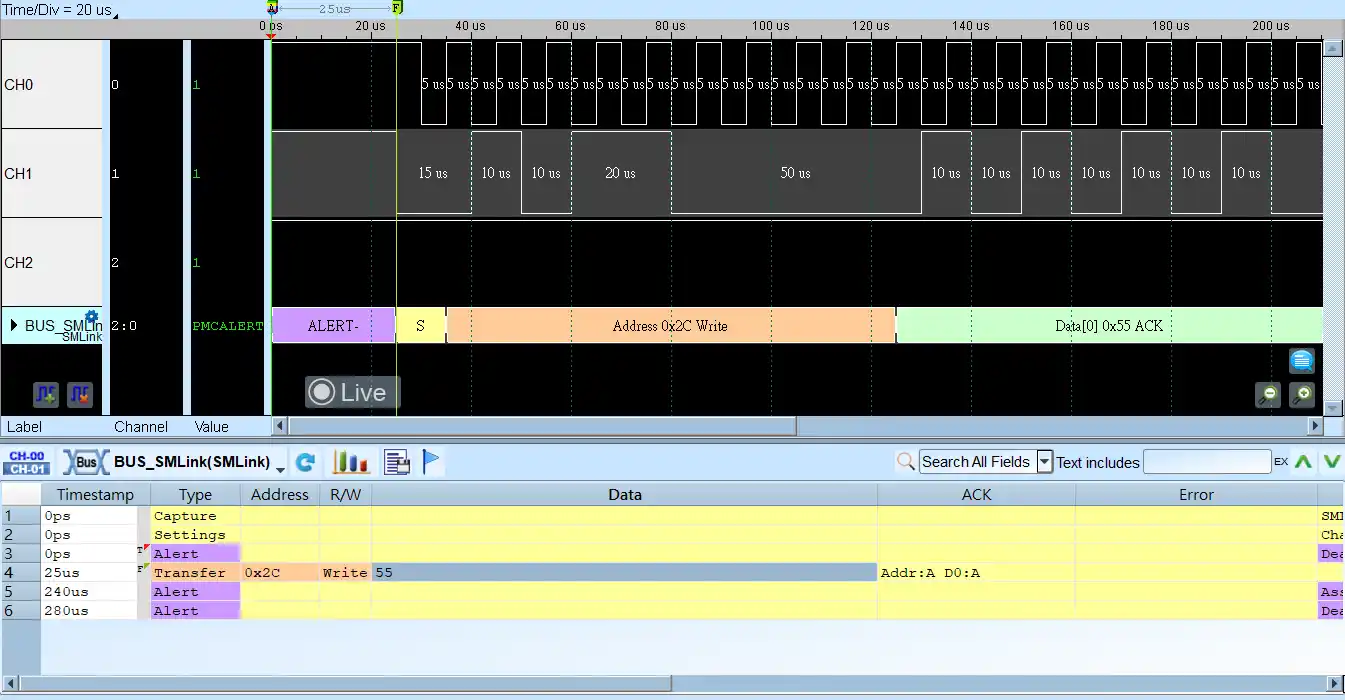
SMLink (Intel CSME System Management Link)
Application: Platform management link -- SMLink0 is mostly used for the integrated LAN PHY; SMLink1 connects the EC, BMC, USB-C PD controller or re-timer depending on the platform
Signal: SMLCLK, SMLDATA (open-drain, I2C / SMBus compatible); ALERT# / PMCALERT# are optional and active low
Voltage: 3.3 V
Speed: Intel documents state up to 1 MHz; 100 kHz is recommended for integrated USB-C use
SMI (Serial Microprocessor Interface)
Application: Video
Voltage: 3.3V
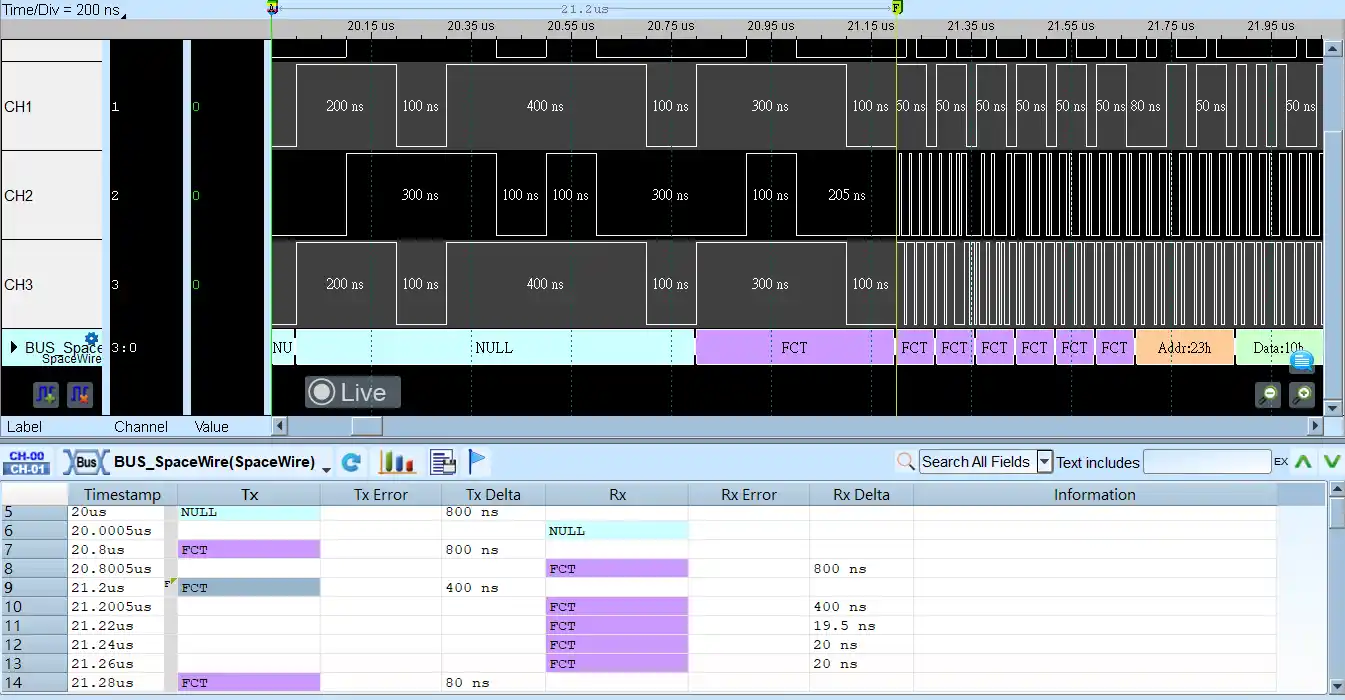
SpaceWire (ECSS-E-ST-50-12C Rev.1)
Application: High-speed data links between instruments, processors and mass memory on spacecraft
Signal: Data and Strobe (one LVDS pair per direction; a full-duplex link uses 4 pairs / 8 wires)
Voltage: LVDS differential swing 247 mV ~ 454 mV, common mode 1.125 V ~ 1.45 V (a 1.25 V threshold is recommended for single-ended probing)
Speed: From 2 Mb/s (no upper limit in the specification; 10 Mb/s is mandatory during link start-up)
SPI (Serial Peripheral Interface)
Application: Serial Flash and Peripherals
Signal: SCK, CS, SDA
Voltage: Defined by IC spec
Application: NAND Flash storage
Signal: SCLK, CS#, SI, SO, WP#, HOLD#
Voltage: 3.3V-1.8V
SSI (Synchronous Serial Interface)
Application: DSP
Signal: SCK, FS, DATA
Voltage: Defined by IC spec
Application: LCD
Signal: /CS, SCL, MPU SI, LCD SI, A0
Voltage: 3.3V
Application:AMD Serial VID
Signal:SVC, SVD, SVT
Voltage :1V~1.1V
Application: AMD Serial VID Interface Version 3 (Revision 1.01)
Signal: SVC, SVD, SVT
Voltage: 1.08 V ~ 1.98 V
Application: Intel SerialVID (Revision 1.96), Protocol: VR14/IMVP9.3
Signal: SCLK, SData, Alert
Voltage: 1V~1.1V
Application: IC Boundary Scan, CPU,DSP,CPLD/FPGA
Signal: CLK, SWDIO
SWIM (Single wire interface module)
Application: The STM8 8-bit MCUs debug system
Signal: SWIM , Rst
Voltage: 3.3V
Application: Link SIM card and NFC
Signal: S1, S2
Voltage: 3.3V
TDM (Time-Division Multiplexing)
Application: TDM Audio (Time Division Multiplexing Audio) is a method of transmitting multiple audio channels over a single data line (or a pair of lines) by dividing the transmission into time slots. It is commonly used in digital audio systems to efficiently handle and transfer multiple audio streams, especially in professional audio, consumer electronics, and automotive applications.
Signal: CLK, WS, Data
Sample Rate: 200MHz
UART (Universal asynchronous receiver/transmitter), RS232C/RS485/RS422
Application: Peripherals
Signal: TX, RX
Voltage: 3.3V or 5V
UFCS (Universal Fast Charging Specification)
Application: Fusion fast charging standard for mobile terminals
Signal: USB D+/D-
Voltage: 3.3V
ULPI (USB2.0 Transceiver Macrocell Interface + Low Pin Interface)
Application: Communicate between USB controller and USB PHY
Signals: CLK, DIR, STP, NXT, DATA[7:0]
Voltage: 0.8V ~ 4.0V
Application: EEPROM
Voltage: 3.3V
USB 1.1 (Universal Serial Bus 1.1)
Application: Peripherals
Signal: D+, D-
Voltage: 5V
Application: The connection between the USB4/TBT3 Ports of two interconnected Routers that provides initial communication and setup functionality.
Signal: Sideband Transactions are sent over SBTX and received over the SBRX
Voltage: 3.3V
Application: It can be a power supply or recharging in notebook / tablet PC / mobile phone / power bank which have a USB Type-C connector
Signal: Configuration Channel (CC)
Voltage: 1.1V
Application: Electronic entry system
Voltage: 3.3V