

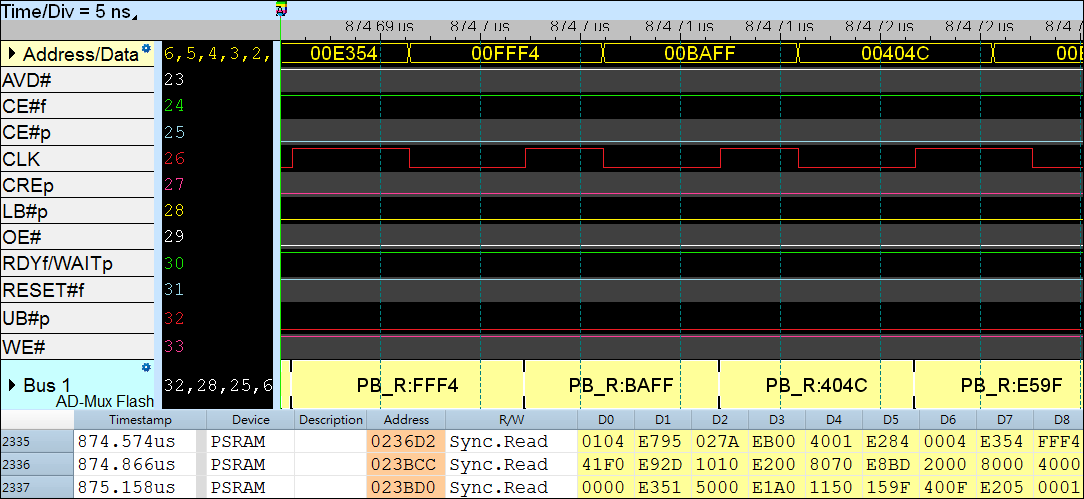
Application: High-speed data transmission
Signal: DATA (LVDS signals need to be converted into single-ended signals or use LVDS probes)
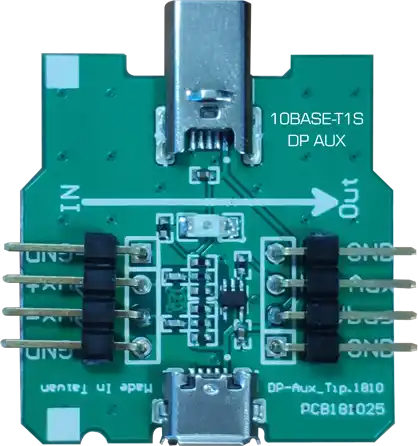
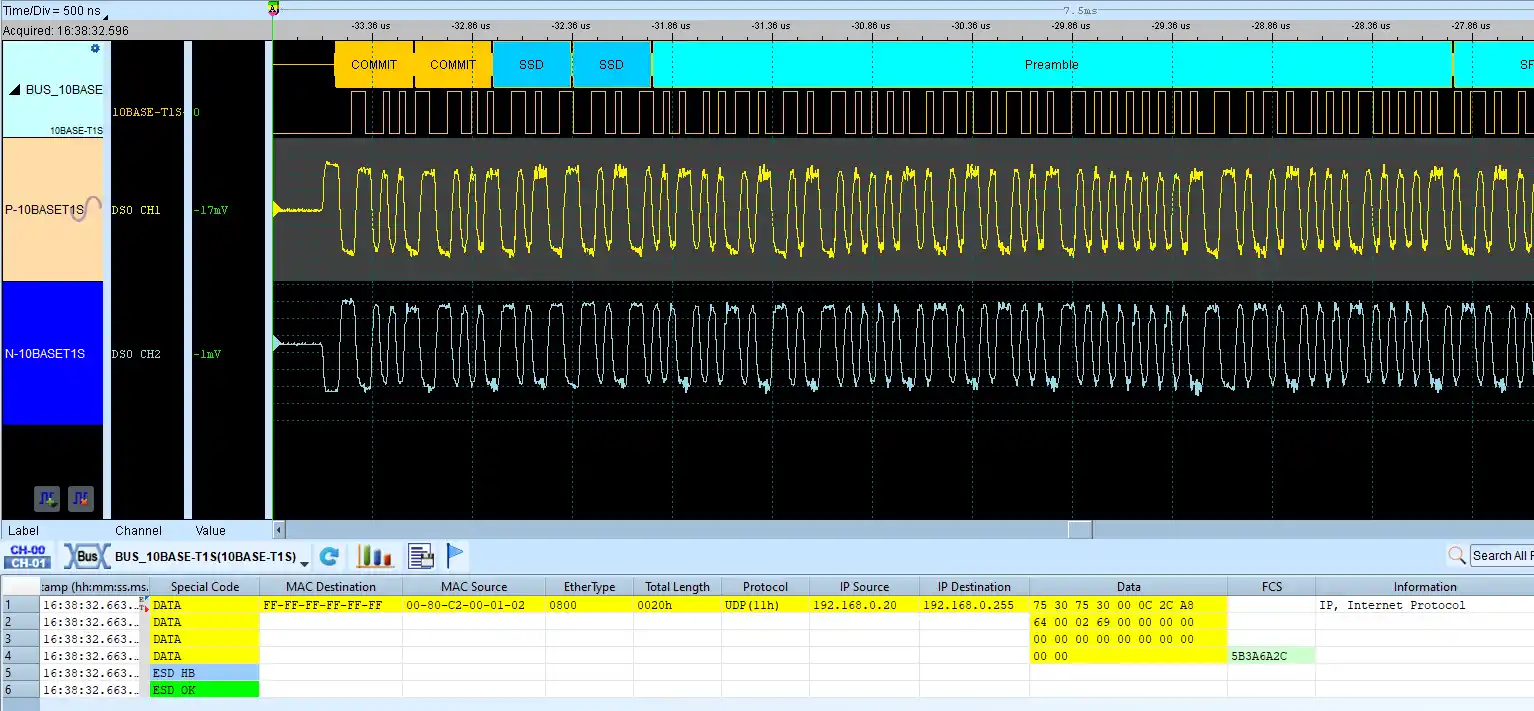
Application: Automobile electronics
Signal: Data
Voltage: 3.3V (When using 10BASE-T1S Differential signal adaptor)
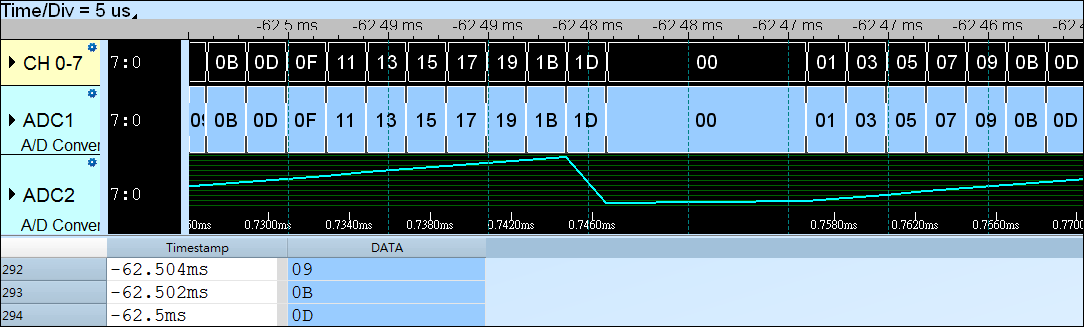
A/D Converter (Analog-To-Digital Converter)
Application: Music recording, Digital signal processing
Voltage: 5V
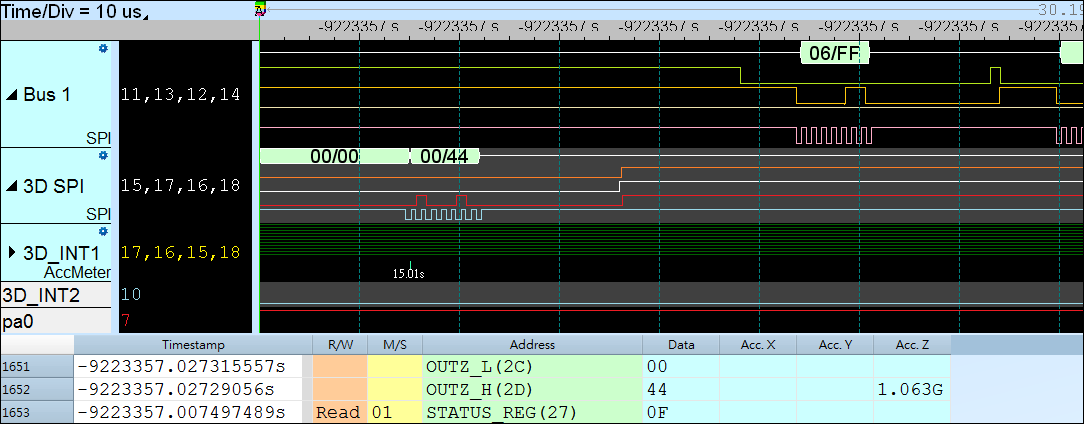
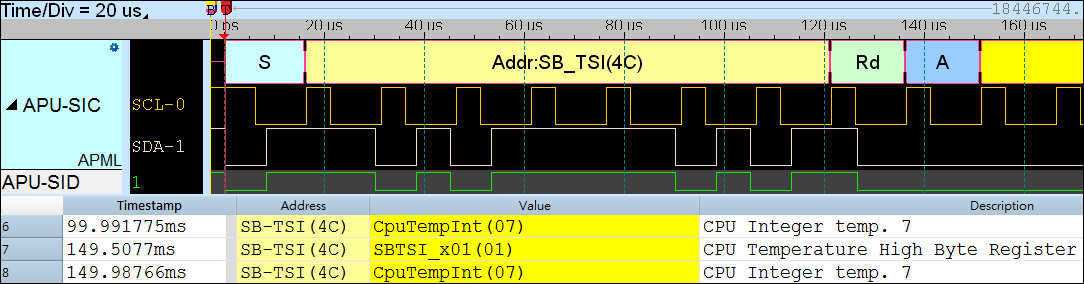
Advanced Platform Management Link (APML)
Application: CPU
Signal: SCL, SDA
Voltage: 1.5V or 1.8V
AVSBus (Adaptive Voltage Scaling Bus)
Application: Power management, Supported versions 1.3 / 1.3.1 / 1.4 / 2.0
Signal: CLK, MISO, MOSI
Voltage: 1V~3.3V
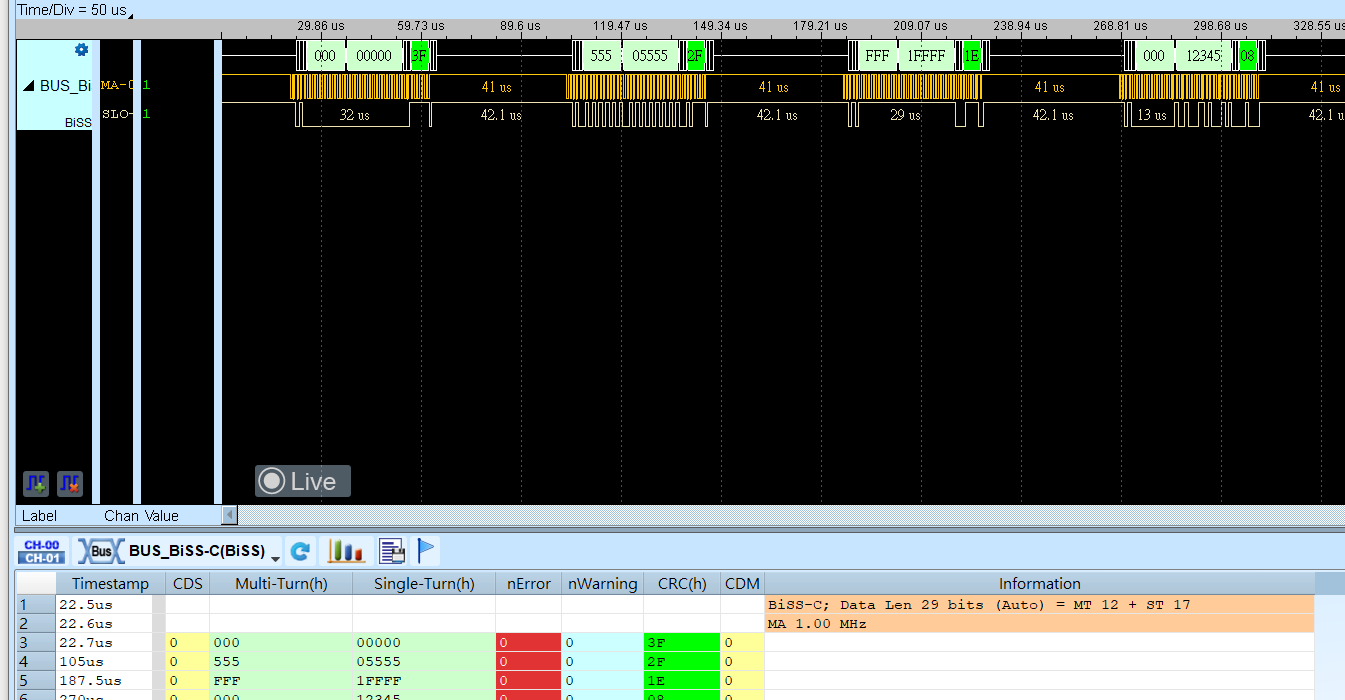
BiSS-C (bidirectional/serial/synchronous)- c mode
Application: Motor Feedback, Smart Sensor
Signal: MA, SLO

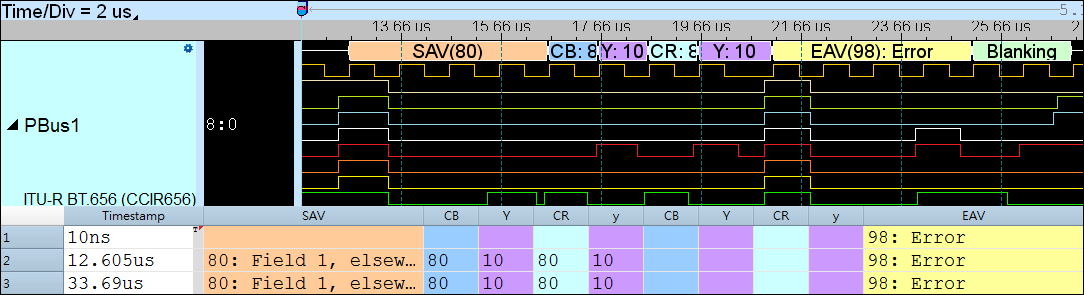
Application: Digital interfaces for HDTV studio signals
Signal: CLK, D0-D7
Voltage: 3.3V
Application: Automobile electronics
Signal: CAN_High or CAN_Low
Voltage: CAN_High- 2.5V~3.5V, CAN_Low- 1.5V~2.5V

Application: Serial Synchronous Interface used by the CODEC inside the phone
Signal: CLK, DATA
Voltage: 3.3V
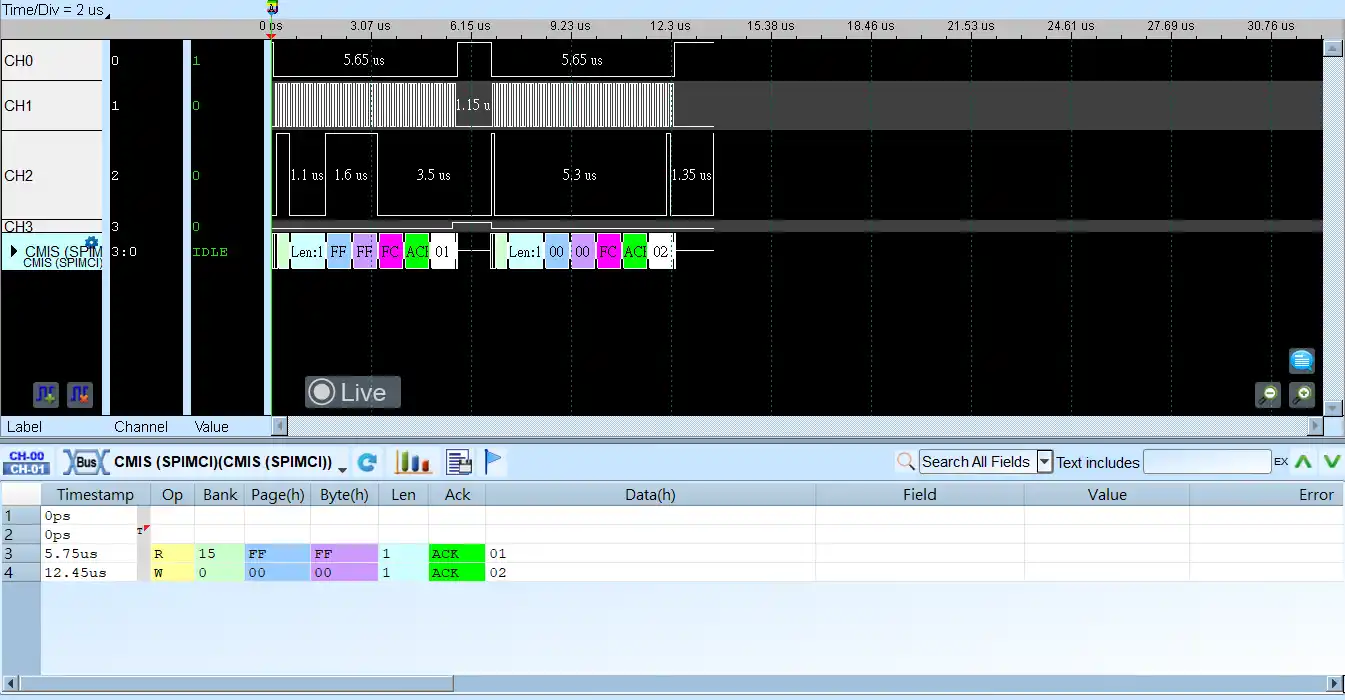
CMIS (SPIMCI) (Common Management Interface Specification, SPI variant)
Application: Management interface for co-packaged optics, where the two wires of the I2C variant cannot carry the required rate; the host reads the module"s identity, temperature, supply voltage and supported applications, and writes configuration and firmware through it.
Signal: Four wires, CSn + CLK + IOTI + IITO
Voltage: SPI levels
Speed: Set by CLK; higher than the I2C variant
Support: OIF CMIS; full duplex -- IOTI and IITO are two independent one-bit streams running in opposite directions, both sampled on the same clock edge; every transaction carries its own bank, page and byte address in its header, so a transaction can be read on its own without knowing what came before it.
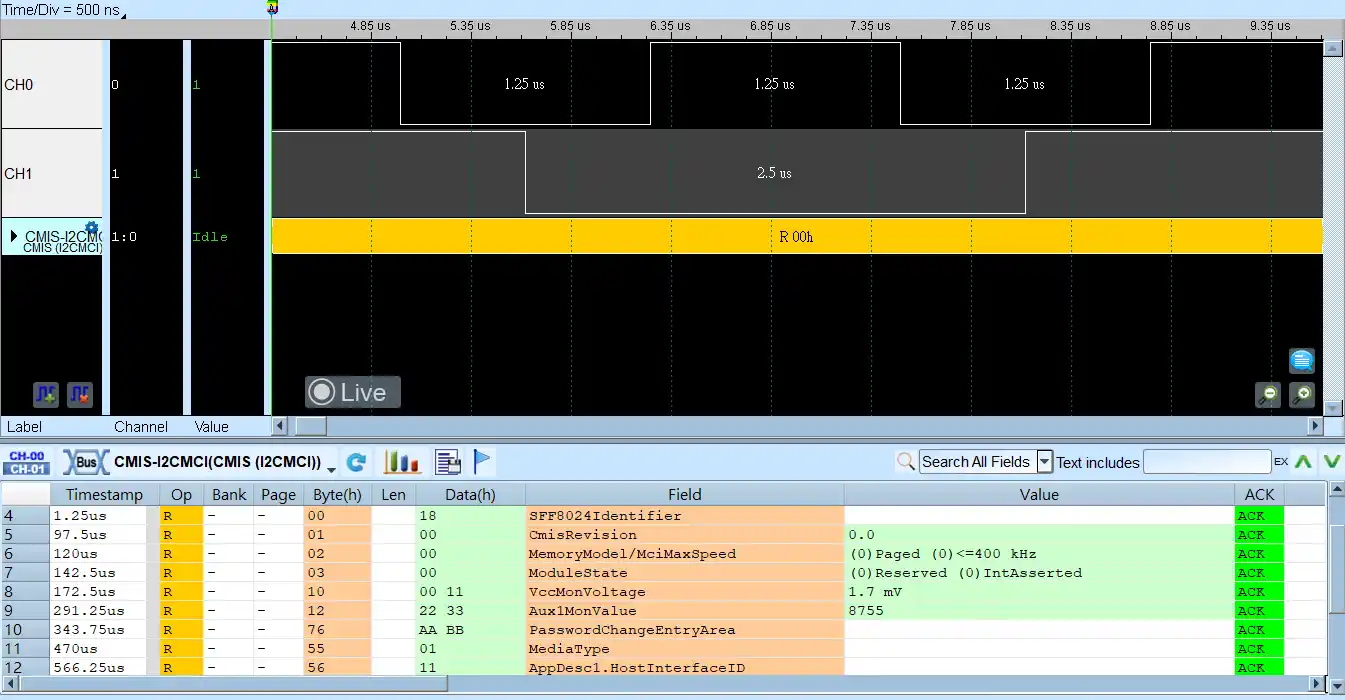
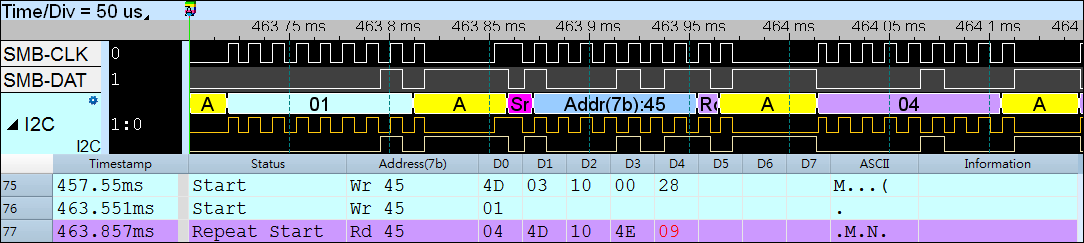
CMIS (I2CMCI) (Common Management Interface Specification, I2C variant)
Application: Management interface of pluggable optical modules (QSFP-DD, OSFP) -- the host reads the module"s identity, temperature, supply voltage and supported applications, and writes configuration and firmware through it.
Signal: Two wires, SCL + SDA
Voltage: I2C levels, open-drain with external pull-ups
Speed: Standard 100 kHz, Fast 400 kHz, Fast-mode Plus 1 MHz
Support: OIF CMIS; the device address is fixed at 1010000b, so the control byte is always A0h for a write and A1h for a read; the Lower page 00h-7Fh is never paged, while the Upper page 80h-FFh depends on the page and bank selected by an earlier transaction.
Application: A text version of the spoken part of a television, movie, or computer presentation.

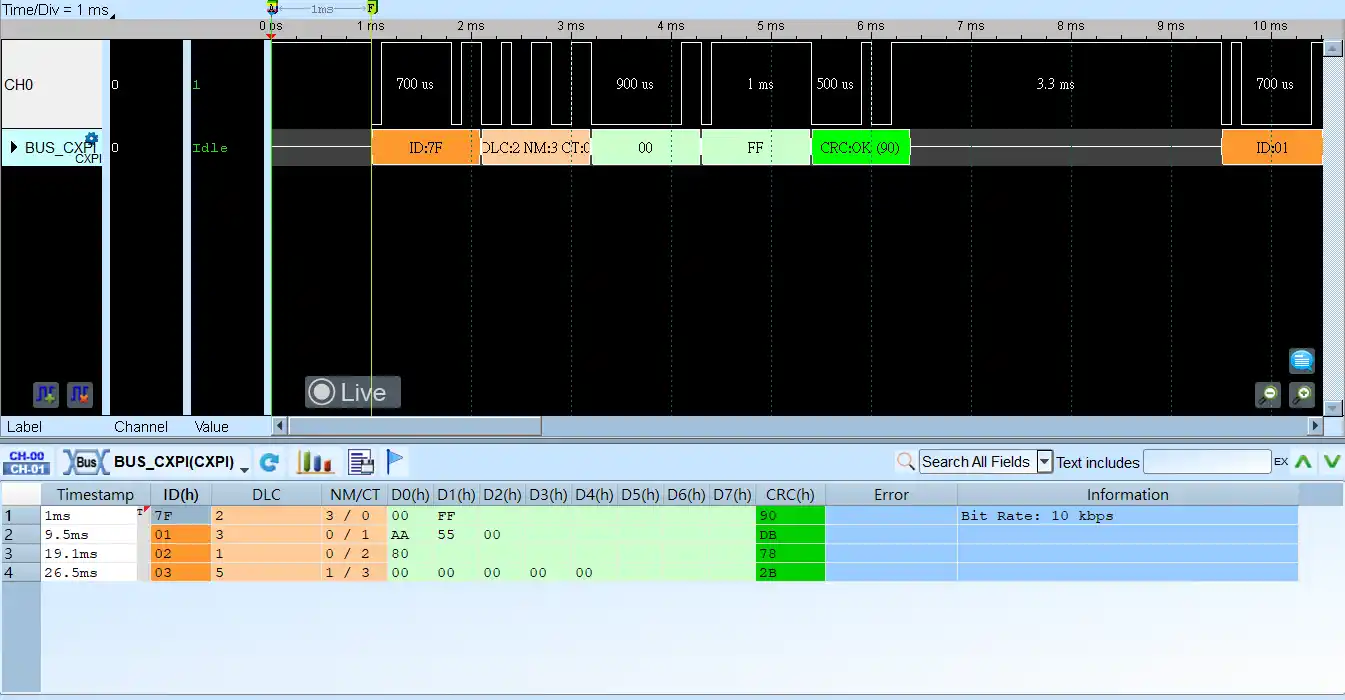
CXPI (Clock Extension Peripheral Interface)
Application: Automotive HMI and body control networks (switches, sensors, actuators, instrument clusters)
Signal: Single-wire CXPI Bus (1 signal + GND, battery-referenced)
Voltage: recessive (idle) = HIGH, dominant = LOW, referenced to the vehicle battery
Speed: 2.4 ~ 20 kbps
Support: ISO 20794 / SAE J3076; both PWM and NRZ line coding; CRC-8 (Normal frame, 12 byte) and CRC-16 (Long frame, 255 byte)
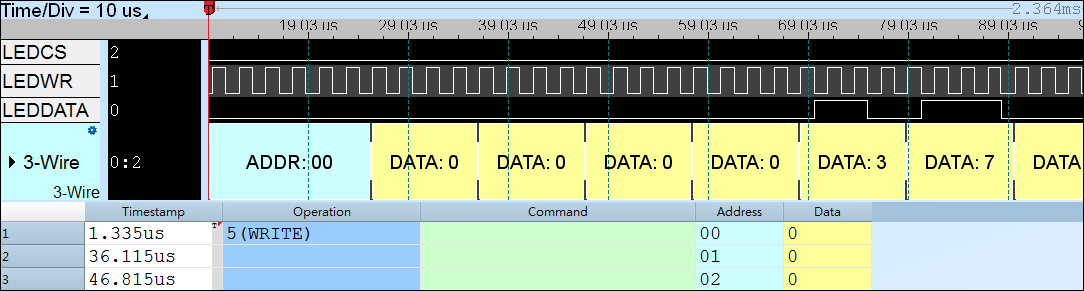
Application: LED
Signal: D+ or D-
Voltage: 16V Max
DDC-EDID (Display Data Channel - EXTENDED DISPLAY IDENTIFICATION DATA)
Application:Monitor
Signal:SCL、SDA

MMC (Multimedia Card)
eMMC (Embedded Multimedia Card) 5.1
Application: MMC
Signal:CLK, CMD, DATA0-7
Voltage: 3V
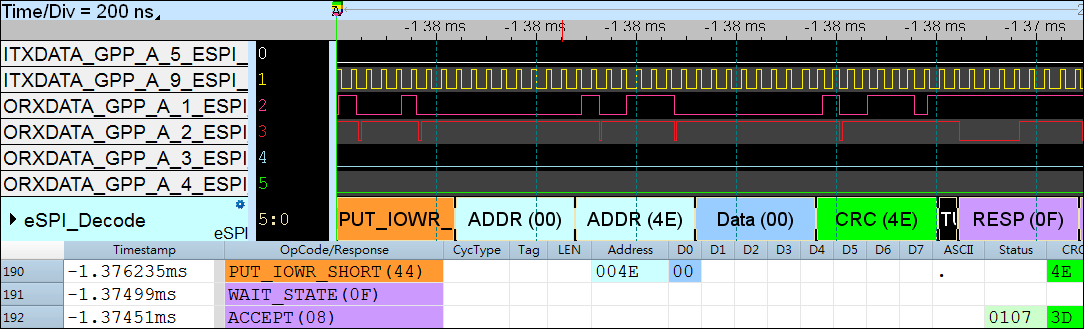
eSPI (Enhanced Serial Peripheral Interface)
Application:Intel client and server platform
Signal:CS#, CLK, I/O[4]
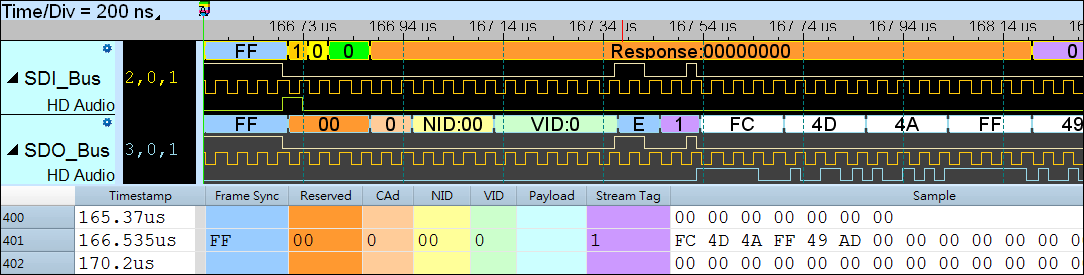

Application: Battery
Voltage: 5V

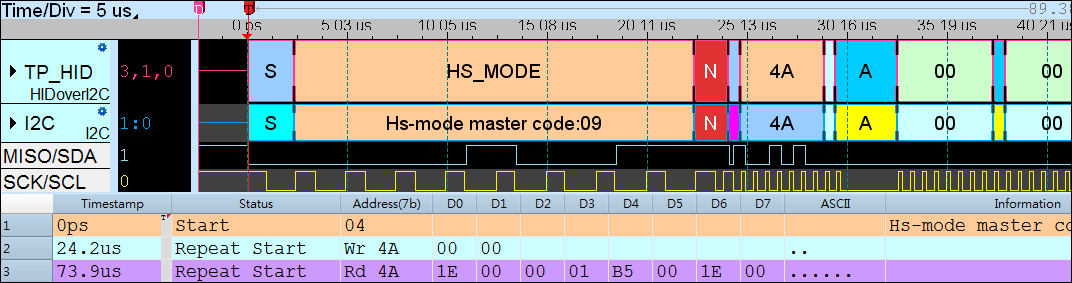
Application: Human interface devices: keyboard, mouse, touch panel
Signal: SCL, SDA, ATTN / Interrupt
Voltage: 3.3V / 5V
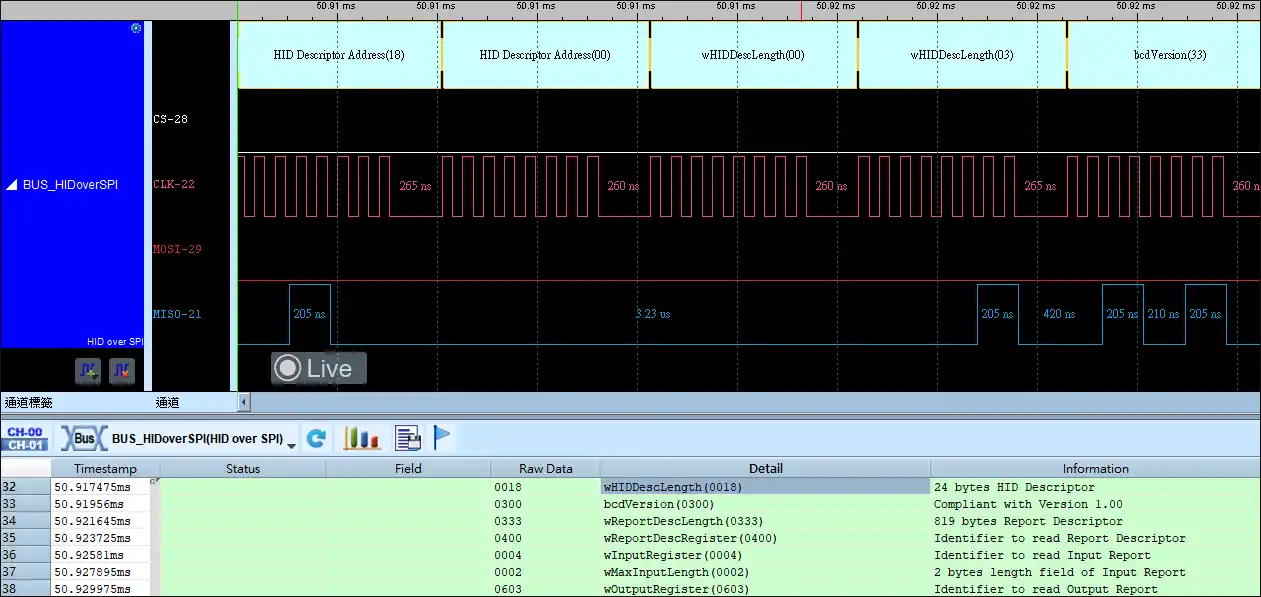
Application: Human interface devices: keyboard, mouse, touch panel
Signal: CS, CLK, MOSI, MISO
Voltage: 3.3V
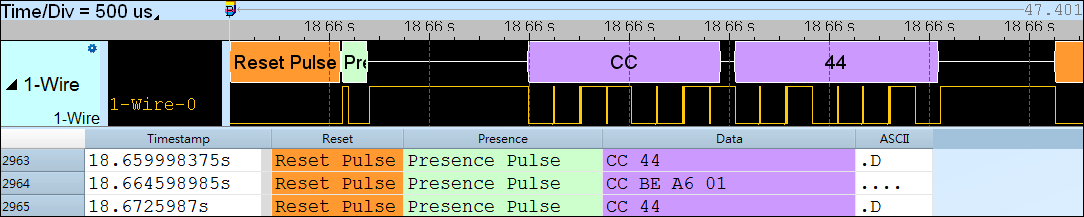
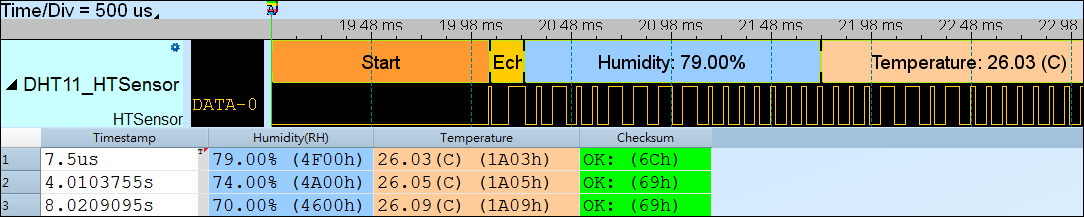
Application: 1-Wire Temperature & Humidity Sensor
Support Chips: CHTA30, DHT11, AM2120, AM2320, UserDefined
Voltage: 3.1V ~ 5.5V
HyperBus
Application:HyperFlash / HyperRAM
Signal:CS, CLK, RWDS, D0-D7
Voltage:2.0V-1.7V
Supported Models:BusFinder series, LA3000+ series, LA4000 series
Contact us
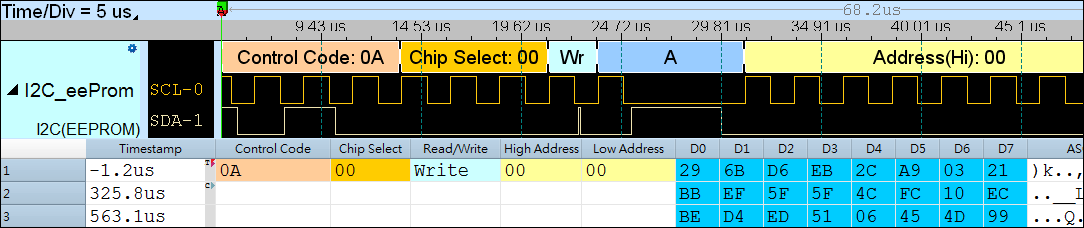
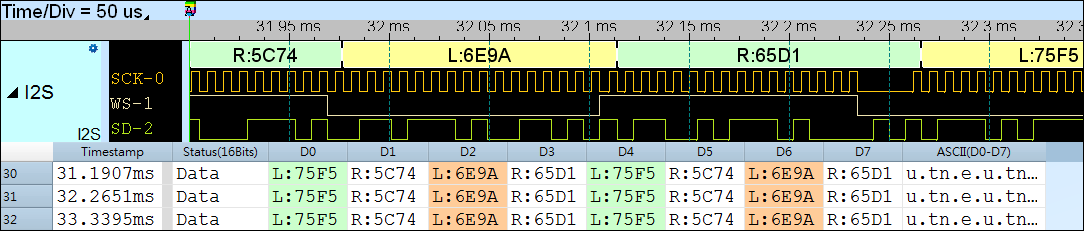
I²S (Integrated Interchip Sound)
Application: Audio
Signal: SCK, WS, SD
Voltage: 2.0V and 2.4V
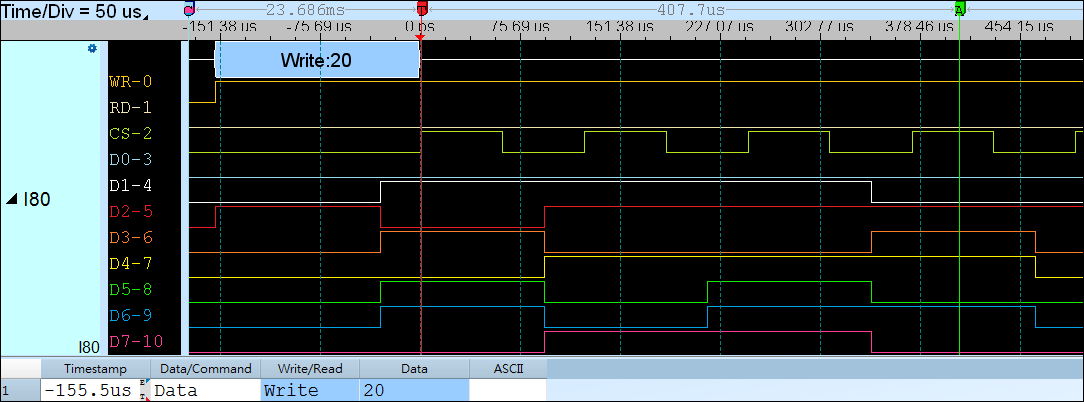
I80 (Intel 8080-series interface)
Application: Intel 8080 series LCD module
Signal: Data bus 0~7, CS, RD/WD
Voltage: 3.3V
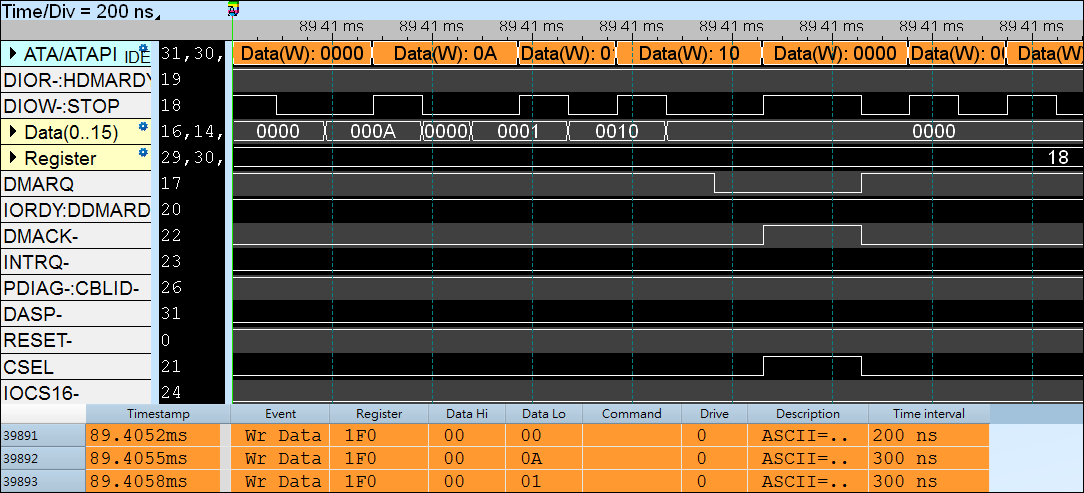
IDE (Integrated Drive Electronics), ATA1~ATA7
Application: Hard disk、Storage
Signal:
General Channel(11 pin) DASP- ,DIOR-:HDMARDY-:HSTROBE,
DIOW-:STOP, DMACK-, DMARQ, INTRQ, IORDY:DDMARDY-:DSTROBE,
PDIAG-:CBLID-, RESET-, CSEL, IOCS16-
Register Channel (5 pin) CS(0:1)-, DA(2:0)
Data Bus Channel (16 pin) DD(15:0)
Voltage: 5V or 12V

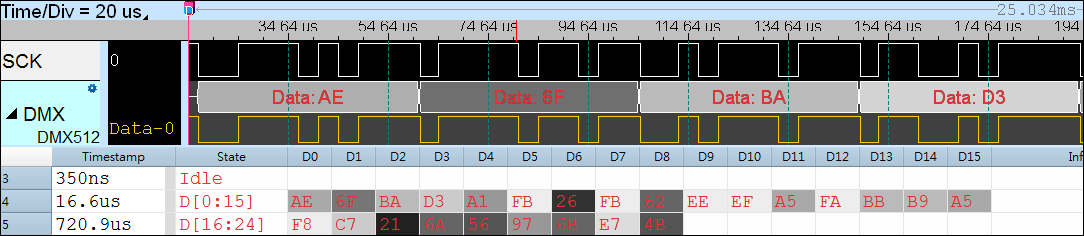
ISELED Digital RGB LED (ISELED)
Application: LED control
Voltage: 3.3V
Application: SAE J1850 is a communication protocol that is primarily used for communication between Electronic Control Units (ECUs) within a vehicle, particularly in the OBD-II (On-Board Diagnostics II) system.
Signal: PWM (Pulse Width Modulation) uses differential signaling / VPW (Variable Pulse Width) uses single-wire transmission.
Voltage: PWM: -1V to 6.25V / VPW: 0V to 20V
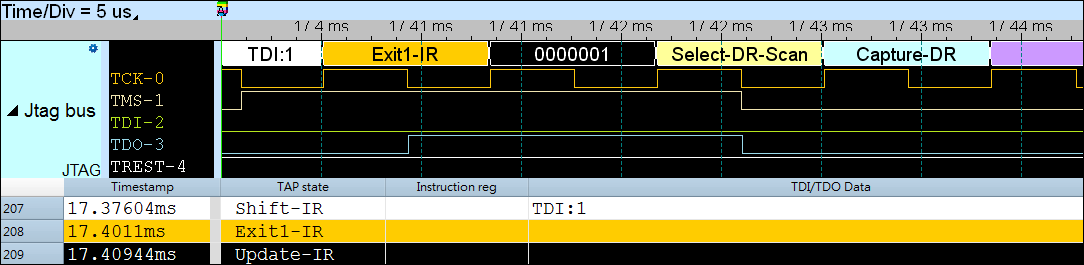
JTAG (Joint Test Action Group) 2.0
Application: IC Boundary Scan, CPU,DSP,CPLD/FPGA
signal: TCK, TMS, TDI, TDO
Voltage: 5V
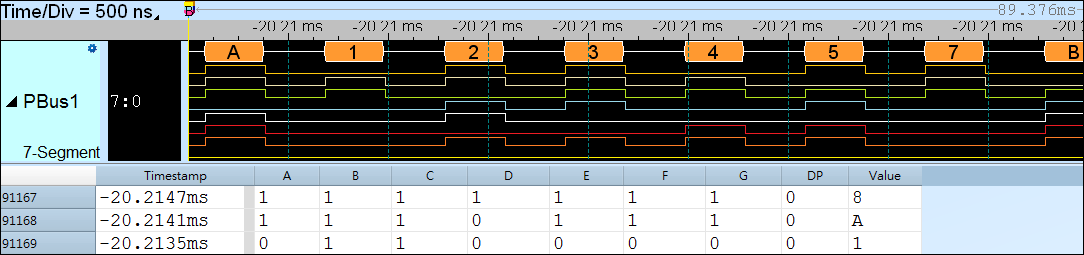
Application: LCM
Signal: RS, RW, E, DB0~DB7
Voltage: 5V
LED Controller
Application: LED Controller (TM1814, WS2811, WS2812, HZ0028, RT7905)
Voltage: 3.3V
LIN Bus 2.2/2.1/2.0/1.2
Application: Automobile electronics
Voltage: 18V
NRZI (Non-Return-to-Zero-Inverted) Transition occurs for a one
NRZI (Non-Return-to-Zero-Inverted) Transition occurs for a zero
Manchester (Thomas)
Manchester (IEEE802.3)
Differential Manchester
NRZI (Non-Return-to-Zero-Inverted) Transition occurs for a one
NRZI (Non-Return-to-Zero-Inverted) Transition occurs for a zero
Manchester (Thomas)
Manchester (IEEE802.3)
Differential Manchester
AMI (Alternate Mark Inversion) Standard
AMI B8ZS(Bipolar 8-Zero Substitution)
AMI HDB3(High Density Bipolar Order 3)
Pseudoternary
MLT-3(Multi-Level Transmit)
CMI(Coded Mark Inversion)